
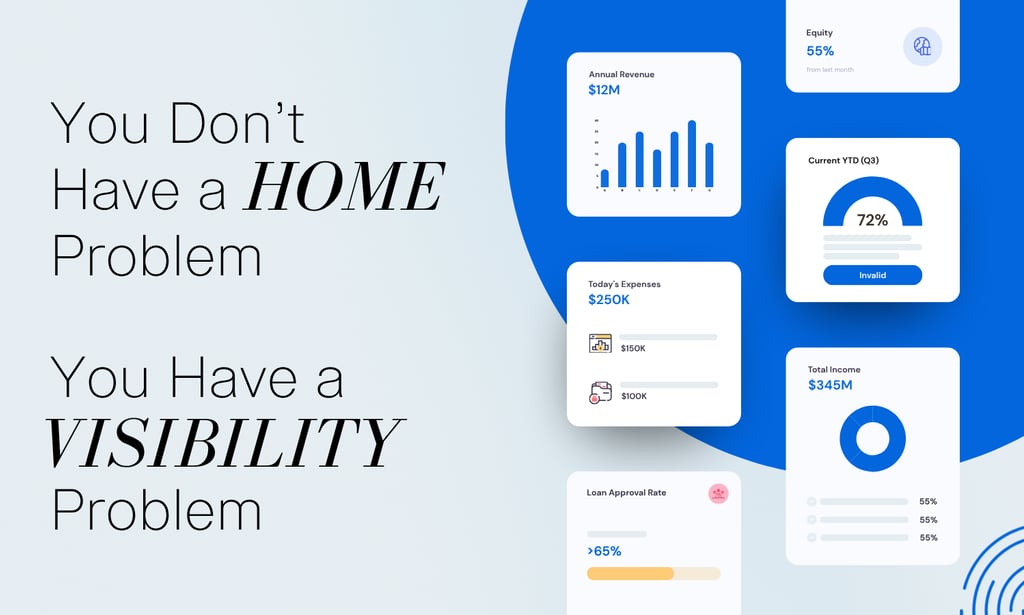
You don’t have a home problem, you have a visibility problem
Most operators think they have a turn or occupancy problem, but the real issue is a lack of visibility into their assets. This blog breaks down how structured asset tracking drives faster decisions, stronger accountability, and improved performance across your portfolio.
Mindy Parish
5/1/20262 min read
We spend a lot of time in this industry talking about the same challenges.
Turn times are too long.
Contractors are unreliable.
Occupancy is inconsistent.
Revenue isn’t where it should be.
And while all of those things are real, they’re not the root problem.
The real issue? Many operators don’t have true visibility into their assets.
Not at the level that actually drives decisions.
What We Think We’re Managing vs. What We’re Actually Managing
On paper, it looks like we’re managing homes.
In reality, most portfolios are managing:
Spreadsheets that are outdated within days
Status updates that vary by manager
Notes buried in systems that no one reviews
Decisions made based on gut instead of data
That’s not asset management. That’s controlled chaos.
And it shows up in ways we all recognize:
Homes sitting “almost ready” for weeks
Pricing delays that quietly eat into revenue
Make-readies that drag without clear accountability
Teams working hard—but not always moving the needle
If You Can’t See It, You Can’t Fix It
We recently rebuilt how we track and manage community-owned homes across our portfolio.
Not because we love reports.
Because we needed better decisions.
What we found was simple:
We didn’t have a home problem. We had a visibility problem.
So we fixed it.
Inside Rent Manager, we created a structured asset tracking system that gives us a real-time view of every home in every stage.
Not just “vacant” or “occupied.”
But what’s actually happening.
Every home now follows a standardized lifecycle:
Vacant
In Rehab
Ready
Marketed
Pending
We layered in additional structure:
Defined rehab stages
Clear pricing strategy and timing
Readiness indicators (utilities, inspections, marketing)
Days in status—tracked, not estimated
This wasn’t about building a better report.
It was about building a system that drives better decisions.
This shift created clarity across the board.
Accountability became clear.
When you can see exactly how long a home has been sitting in a specific stage, conversations change. We moved from general updates to specific, actionable discussions.
Time-to-revenue became visible.
One of the most overlooked drivers of NOI is how long it takes a home to go from vacant to income-producing. Once we started tracking it, we could finally manage it.
Pricing decisions improved.
Instead of reacting late, we now have clear timing triggers that guide when to adjust pricing and when to hold.
Weekly reviews became meaningful.
Our conversations shifted from surface-level updates to focused, data-driven decision-making.
What Most Operators Are Missing
It’s not effort.
Your teams are working hard.
What’s missing is structure:
No standardized asset lifecycle
No consistent tracking across communities
No clear ownership at each stage
No defined triggers for action
Without that structure, even strong teams struggle to perform consistently.
What You Can Do Right Now
You don’t need to overhaul your entire operation overnight.
But you do need to start with visibility.
Start here:
Define 4–5 standard statuses for every home
Track days in each status
Assign clear ownership at each stage
Establish decision triggers for pricing and escalation
Review it consistently, every week
These are simple steps—but they create powerful clarity.
This is bigger than tracking.
This is where operations are heading:
More predictable turn timelines
Smarter, data-driven pricing strategies
Systems that flag issues before they become problems
We’re not far from a world where your data tells you what to do next—before your team even asks.
The operators who build that foundation now will have a clear advantage.
If your homes aren’t turning fast enough…
If your occupancy feels inconsistent…
If your team is constantly reacting…
Take a step back.
It might not be a people problem.
It might not even be a process problem.
It might just be a visibility problem.
And that’s something you can fix.
If you’d like a copy of our Asset Tracking & Home Readiness Checklist, message us.
Copyright © 2024. All rights reserved.